What does a baby get out of swim lessons?
Your baby gets to explore movement and new sensations in the water while staying close to someone they trust.
What does a parent do during class?
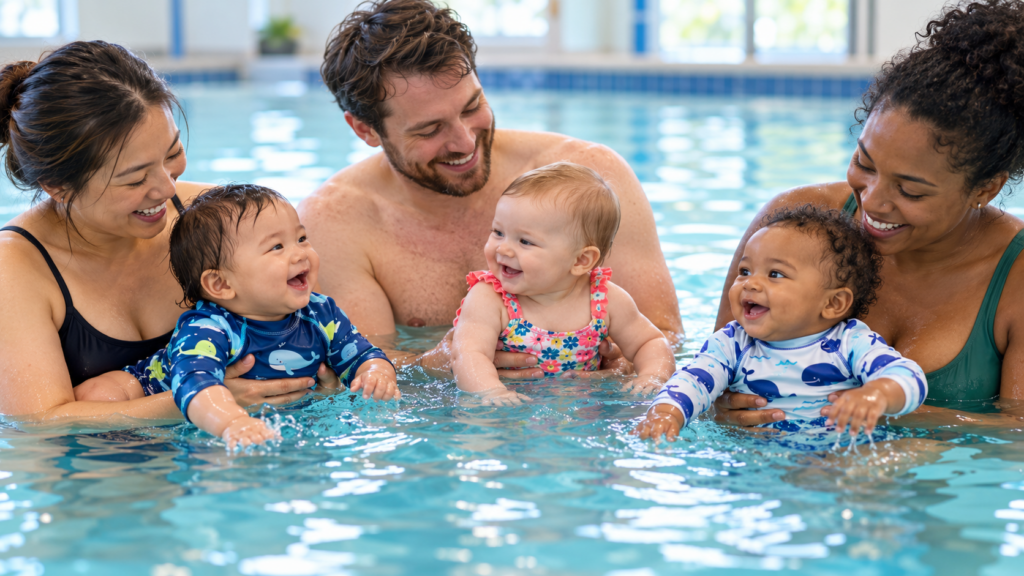
You join your baby in the pool and take part in gentle activities led by an instructor.
What Can a Baby Gain From Swim Lessons?
If you picture a baby swim class, you might imagine lots of splashing. Some days, that is exactly what happens. Other days, a baby’s biggest accomplishment is taking in the pool from the safety of a parent’s arms.
Both can be valuable. At Little Flippers Swim School, parent and baby lessons introduce the water through gentle play, with you there to support your child every step of the way.
Your baby gets to explore with someone they trust
The pool is full of new things to notice: water moving against little hands, the sound of other families, and the feeling of being held in a new setting. You give your baby a familiar place from which to take it all in.
There is no single way a baby should respond. One may reach for a toy immediately. Another may need a few visits before they are ready to engage. Following those cues keeps the experience centered on your child.
You get time together
A parent and baby lesson asks you to be present. You sing, play, hold your baby, and notice the little changes from week to week. In a busy family schedule, that focused time can be a benefit of its own.
Class also gives you a chance to see other parents and caregivers. You may share a smile over a familiar song or find that another family is navigating the same firsts you are.
You practice supporting your child in the water
If you have never brought a baby into a pool, it is reasonable to have questions. How do you hold them comfortably? What should you do if they seem uncertain? A Little Flippers instructor guides the activities and helps you learn as you go.
Your baby can enjoy gentle movement and sensory play while you build your own comfort. Researchers have explored whether baby swimming relates to later motor development. One small study found differences in certain balance and grasping abilities, but called for more rigorous research. That finding is not a reason to promise faster development. The immediate value is the experience you share in class.
What baby lessons do not replace
A baby’s enjoyment of the water does not mean they can swim independently. The American Academy of Pediatrics says there is currently no evidence that classes for babies under 1 reduce drowning risk. It describes parent and child water play as an enjoyable way to get used to the pool.
Whenever children are in or near water, they still need close, focused adult supervision. Swim lessons become one part of a larger water safety plan as children grow.
Little Flippers’ Bathtime Babies class welcomes infants ages 2–5 months with a parent or caregiver in the pool. Learn about baby swim lessons at Little Flippers in Natick and Winchester.
Sources: American Academy of Pediatrics guidance on swim lessons; baby swimming and motor abilities study.

